




















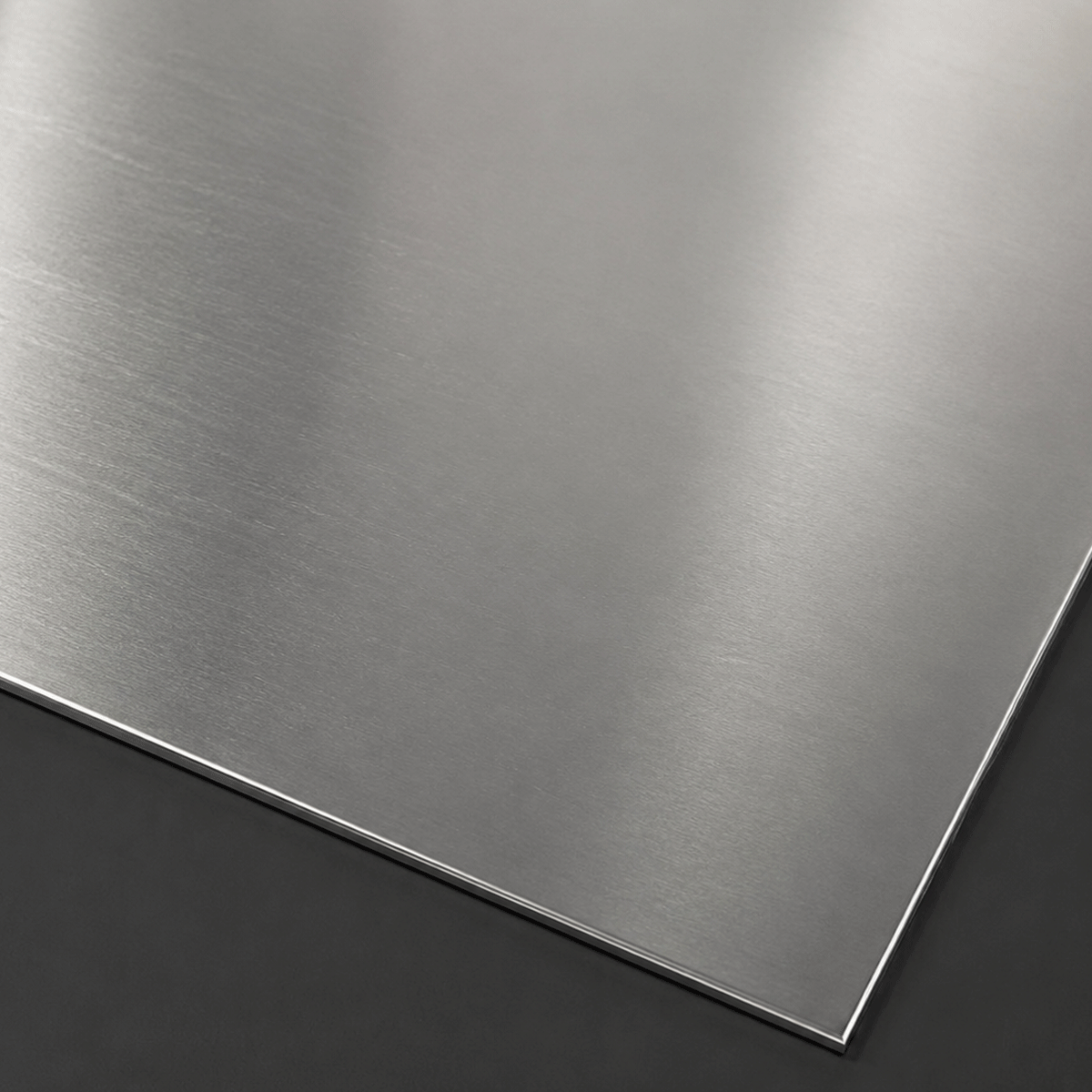
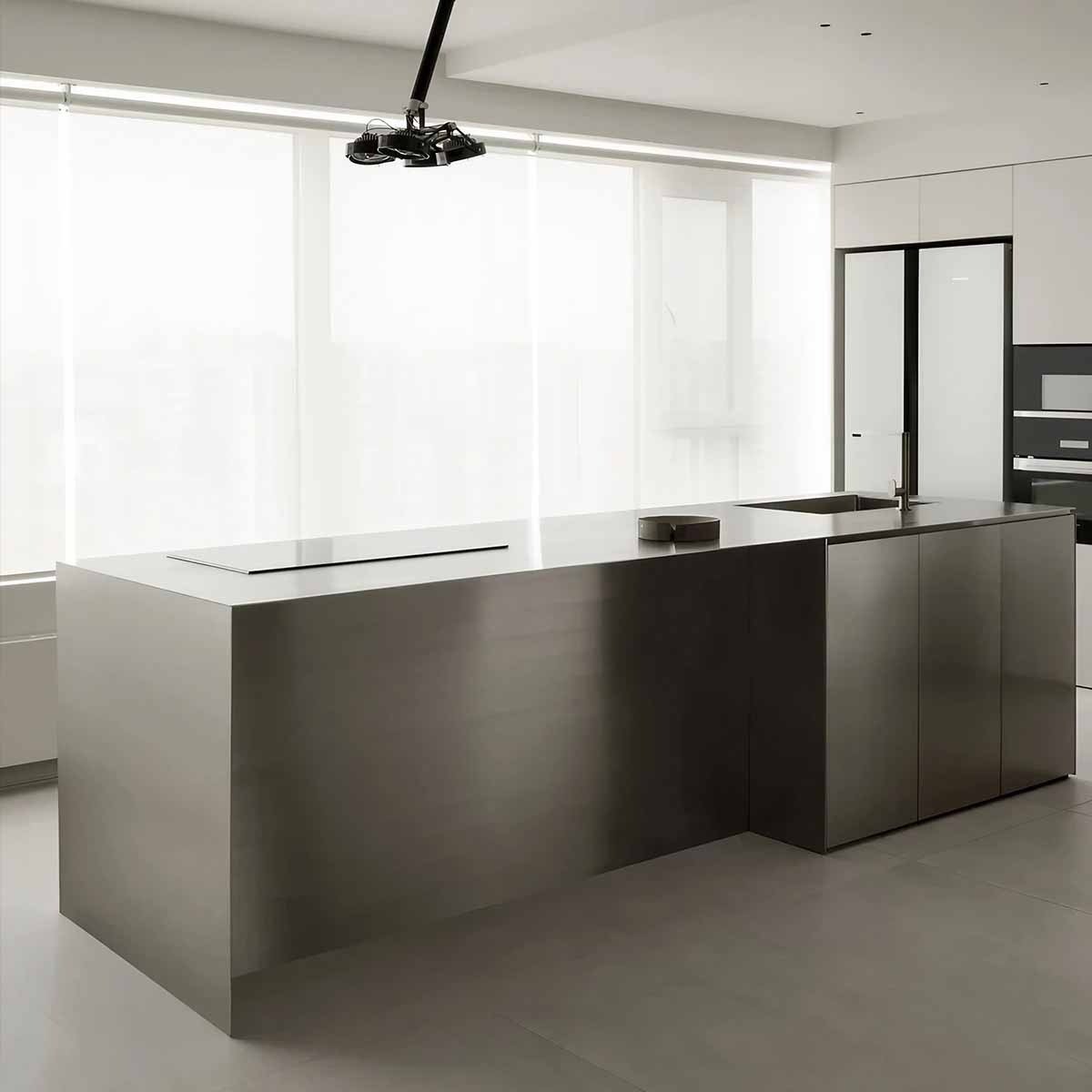





Stainless steel is one of the most versatile metallic products that is used across a variety of industries 304 and 316 grades of stainless steel are the most common. All of them have their characteristics which makes them suitable for various applications.
Therefore, it is delicate to differentiate between the 304 and the 316 stainless steel in terms of uses of the materials for various projects. The most important parameters which influence the choice are cost, performance, and corrosion characteristics.
Table of Contents
ToggleComposition of 304 vs. 316 Stainless Steel
Most stainless steel materials have a composition that determines their efficiency in terms of corrosion resistance. Different grades of stainless steel include 304 and 316 each having its unique composition hence used in different circumstances.
304 Stainless Steel Composition
- It contains a Chromium range of approximately 18-20% and a Nickel range of approximately 8-10.5%.
- Utilized in applications where weldability is a requirement but with lower levels of carbon to reduce the risk of brittleness.
- The metal which forms the bulk of the layer is iron with a small proportion of manganese and silicon.
- Employed widely in low-end applications and tends to provide moderate resistance to corrosion in normal environments.
316 Stainless Steel Composition
- Has Chromium content of between 16-18%, Nickel of between 10-14%, and Molybdenum of between 2-3%.
- It is found that the addition of molybdenum improves the pitting and crevice corrosion resistance of the alloy, particularly in chloride solutions.
- It is more durable in terms of temperatures and chemical conditioning, making it appropriate for marine, pharmaceutical, and chemical use.
The type and proportion of the elements in the stainless steel clarify the corrosion capabilities of the material and efficiency. Depending on the requirements, grades such as 304 and 316 have different compositions, and therefore have different purposes.
Sharing experience on comparing 304 vs 316 stainless steel? Talk to our specialists to get the expert advice, material suggestions and tailor-made fabrication solutions to choose the appropriate grade for your architectural and design projects.
Performance Differences: Corrosion Resistance
Corrosion resistance is one of the essential determinants for choosing the right grade of stainless steel for a particular application. Comparing the 304 and 316 stainless steels shows a vast difference in how each of them bears up to corrosion.
304 Stainless Steel Corrosion Resistance
- The compound is reported to be slightly reactive with hydrogen compound in mild conditions while being irresponsible to oxidizing conditions.
- Performs fairly well where and when it is used indoors and in places where it has not come in contact with chloride and other extreme chemicals.
- It is not recommended for any applications where it will not be suitable for use with seawater or any conditions containing chloride.
316 Stainless Steel Corrosion Resistance
- Greater resistance to corrosion especially in exposure to chloride which makes it suitable to be used in marine applications.
- Molybdenum in its composition has a high impact on increasing the resistance of the alloy to pitting and crevice corrosion.
- Favored in chemical treatments, medication industries together with zones with a high level of dampness or ground salinity.
Concerning corrosion it has been pointed out that grade 316 stainless steel outperforms them all in critical environments. 304 stainless steel offers good performance but may not do so well in a highly corrosive environment such as marine or industrial.
Cost Comparison
The prices are always going to play a role in deciding the choice between 304 or 316 stainless steel. As realized, 316 type of material is mostly more expensive than 304 type mainly because of the compound and additional amenities that it offers.
Cost of 304 Stainless Steel
- Because the material used is comparatively simple, the cost is low, and several applications can benefit from this type of product.
- Most suitable for application in industries where formulations with exotic corrosion-resistant properties are not required.
- Applications of this material are within the range of mechanical and electrical appliances, buildings and structures, and other industries.
Cost of 316 Stainless Steel
- Costlier than 304 and 316 stainless steel, mainly due to the presence of molybdenum, which increases its erosion protection qualities.
- Designed for premium products where the advantages of enhanced wear resistance are high enough to compensate for the extra cost.
- Is employed in applications in industries that are more demanding, like the marine, chemical, and pharmaceutical industries, among others.
304 stainless steel is cheaper than 316 stainless steel, however, 316 stainless steel has far better performance plus it can withstand some intense conditions. It all comes down to your objective, the sort of performance you require, and of course, money.
Availability and Market Demand
Stainless steel alloys can be available to impact project timeframes by way of their delivery and create fluctuations in material prices. Knowledge of the market requirement of 304 against 316 as stainless steel will help drive the right decision in particular regard.
Availability of 304 Stainless Steel
- Quite accessible, enhancing its availability, hence easier to acquire than preserve, which also makes it cheaper.
- For smaller general uses, right from kitchen utensils, cutlery, and also in architectural designs, among others.
- It is available in many forms and forms of uncompounded products, including sheets, pipes, and bars.
Availability of 316 Stainless Steel
- Compared to 304, less frequently used with the availability depending on specific geographic location.
- Usually needs to be ordered in a certain shape and size, preferably not to exceed a certain thickness or width.
- They are mainly applied in marine, pharmaceutical, and chemical processing industries relying on their unique qualities.
304 stainless steel is more widely available and easier to obtain than 316 so where deadlines and or budgets are an issue 304 can be used. On the other hand, 316 stainless steel may take longer time and effort to get as the material is a little bit unique.
Strength and Durability
Stiffness and toughness are also a reason for selecting stainless steel in an environment that demands its use. 304 and 316 stainless steel have a tensile strength of similar standards as the other yet they vary in performance under severe conditions.
304 Stainless Steel Strength
- The two unique characteristics of this alloy are tensile strength which is as astonishing as its ease of forming into shapes.
- Suitable for the majority of applications ranging from low temperature up to intermediate temperature applications (up to 1600° F).
- Has measured up well mechanically in terms of performance, but not necessarily in extreme environmental situations.
316 Stainless Steel Strength
- Said to be marginally superior to 304 stainless steel as far as corrosive resistance is involved especially in extreme conditions.
- It has a higher temperature (up to 1700°F) compared to foil therefore it is ideal for industrial and high-temperature uses.
- It has higher molybdenum content imparting improved toughness and resisting stress cracking as well as corrosion fatigue.
However, 316 stainless steel has better high strength or high stress, high-temperature requirements than 304. Its high strength-to-weight ratio also adds to the benefits and it is even resistant to corrosion fatigue thus suitable for high-stress use.
Welding and Fabrication
One of the key differential parameters concerning the implications of welding and fabrication is the stainless steel grades. Welding, therefore, can influence the economy in the overall process of manufacture since it determines how easy it is to join metals.
Welding 304 Stainless Steel
- Fabrication is much easier as compared to 316 grade stainless steel and is does not pose much difficulty while welding.
- This is commonly used in areas where heavy welded joints are not needed in a certain manufacturing process.
- There are no complexities involved when welding materials together which makes welding affordable to most fabricators.
Welding 316 Stainless Steel
- It was also slightly more demanding to weld as had been done with the addition of molybdenum to the material.
- Needs specific Technology and control to prevent things like carbide precipitation more commonly occurring in thicker items.
- May perhaps have to be welded with low-carbon grade or stable welding electrodes for enhanced performance.
The one that is more easily weldable is 304 stainless steel and it is preferential for common manufacturing procedures. 316 stainless steel is more difficult to weld than 304 and it just has to be used when more strength and corrosion resistance is needed.
Common Applications
304 and 316 are the grades of stainless steel that are common in industries, however, they are effective in different capacities. That makes them ideal for particular environmental and mechanical requirements due to their qualities and excellence.
Applications of 304 Stainless Steel
- Most popular in food processing, cars and auto industries, dishwasher and refrigerator making, and construction projects.
- Used indoors and in mild outdoor exposure areas such as countertops, sinks, and ornamental metal working.
- Offers reasonable costs for most industries where the equipment is not exposed to rigorous chemical compounds.
Applications of 316 Stainless Steel
- Marine, coastal, and chemical process industries particularly chemical plant areas and chemical manufacturing plants.
- Popular in pharma machinery, medical devices, and marine applications because of the product’s high resistance to salt and chemicals.
- Most suitable for applications where the hose is expected to perform several high-end activities to its expected durability.
Grade 304 stainless steel is widely used and economical in providing a general-purpose material. But 316 stainless steel offers better performance compared to other conditions that are corrosive or extreme making it more suitable for specific uses.
Need help understanding 304 vs. 316 stainless steel? Contact our experts to view expert advice, high-quality materials and reliable solutions that are optimized for your performance and application needs.
Environmental Considerations
People are becoming conscious of the environment in use and therefore there is a rise of sustainable material selection. Grade 304 and grade 316 stainless steel have some important environmental benefits in terms of recyclability as well as durability.
Recyclability of 304 Stainless Steel
- Light and easy to manipulate, thus possesses a high recyclability level which makes it friendly to the environment.
- Currently, one of the most commonly recycled products globally which makes it a suitable product for several industries.
- Especially suitable for projects that want to minimize their direct or indirect emission of green house gases.
Recyclability of 316 Stainless Steel
- It is highly recyclable but the recyclability may involve high energy consumption because of the presence of molybdenum.
- Although slightly more complicated to recycle it proves rather long-term to bother to take action and recycle.
- Recommended for environmentally friendly projects that would need durable material within the building process.
304 and 316 stainless steel materials used in this project are friendly to the environment and recyclable. Nonetheless, 304 takes less effort and energy to recycle compared to 316 therefore makes the best choice for projects that have aesthetic sustainability.
Conclusion
In general, the decision to choose 304 or 316 comes down to the basics of corrosion resistance, cost burden, and respective application. In this case, one can compare them and make the right decision for the choice of the particular material suitable for the project implementation.
Contact Request
Discuss 304 vs. 316 stainless steel solutions with our team. Call us now to get the expert help and custom solutions you need.